Download
GL-FF

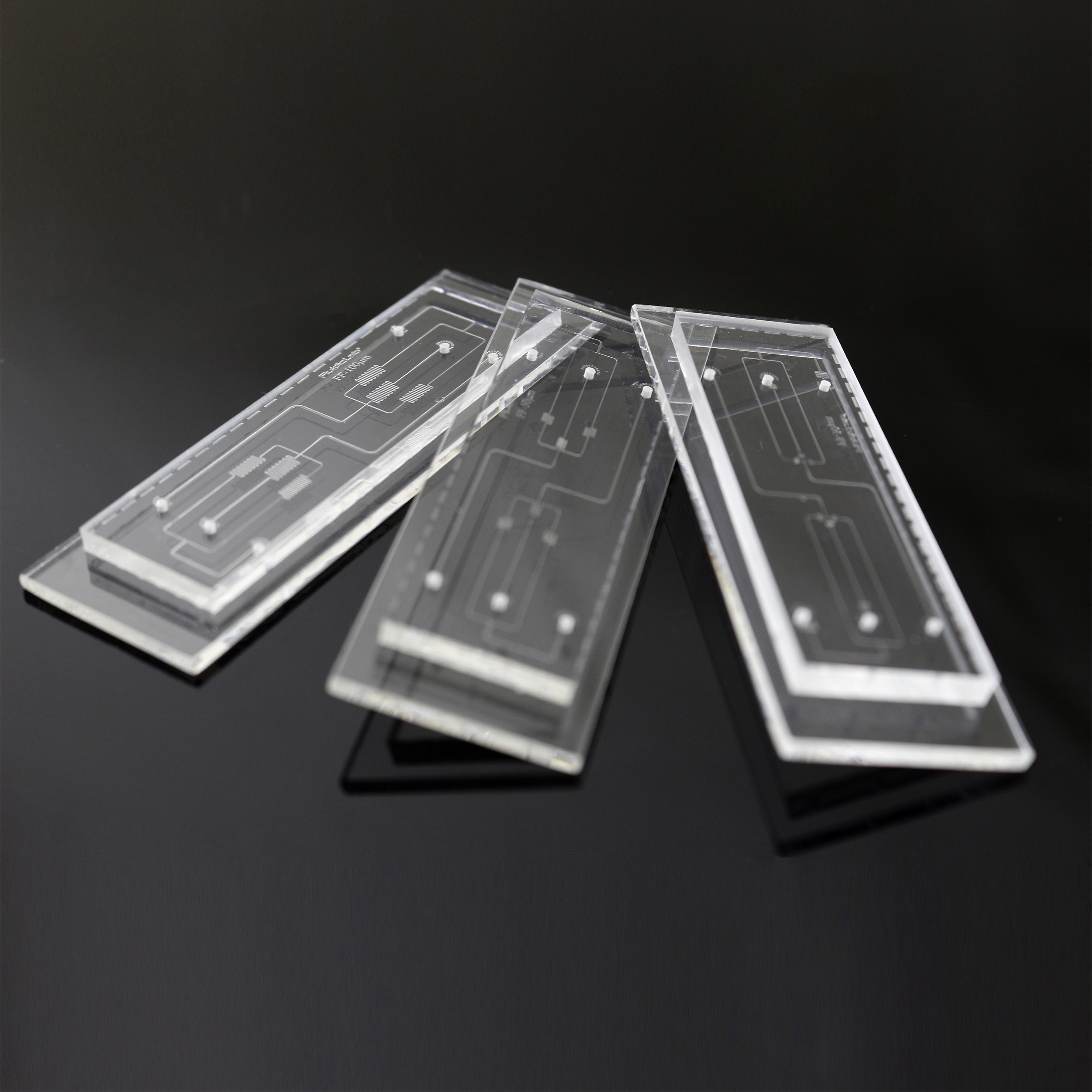
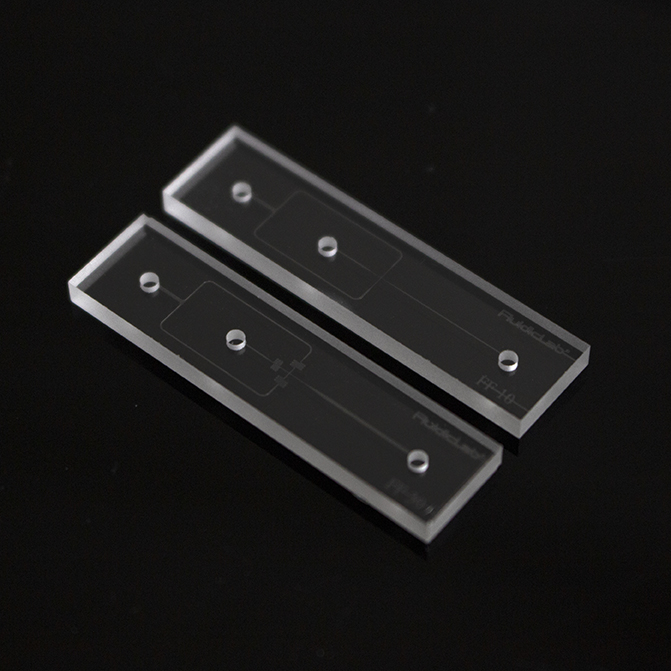
Glass Flow Focusing Chips

Advantages of glass flow focusing chip:

Superior optical transparency

Excellent high-pressure resistance

Chemically inertness, resistance to various corrosive and organic solvents

Excellent biocompatibility

Low fluorescence background, easy integration with various fluorescence detection methods

Hydrophilic and hydrophobic versions

FEATURES & BENEFITS

Features

Glass Standard Flow Focusing Chips

Droplet microfluidic is a field for turning a continuous fluid into microscale droplets based on the interfacial tension and flow shear between two immiscible fluids. Compared with the cross-flowing geometry, the flow-focusing geometry is more stable, and has a wider range of microdroplet sizes. Therefore, it is currently the best choice for microdroplet generation.

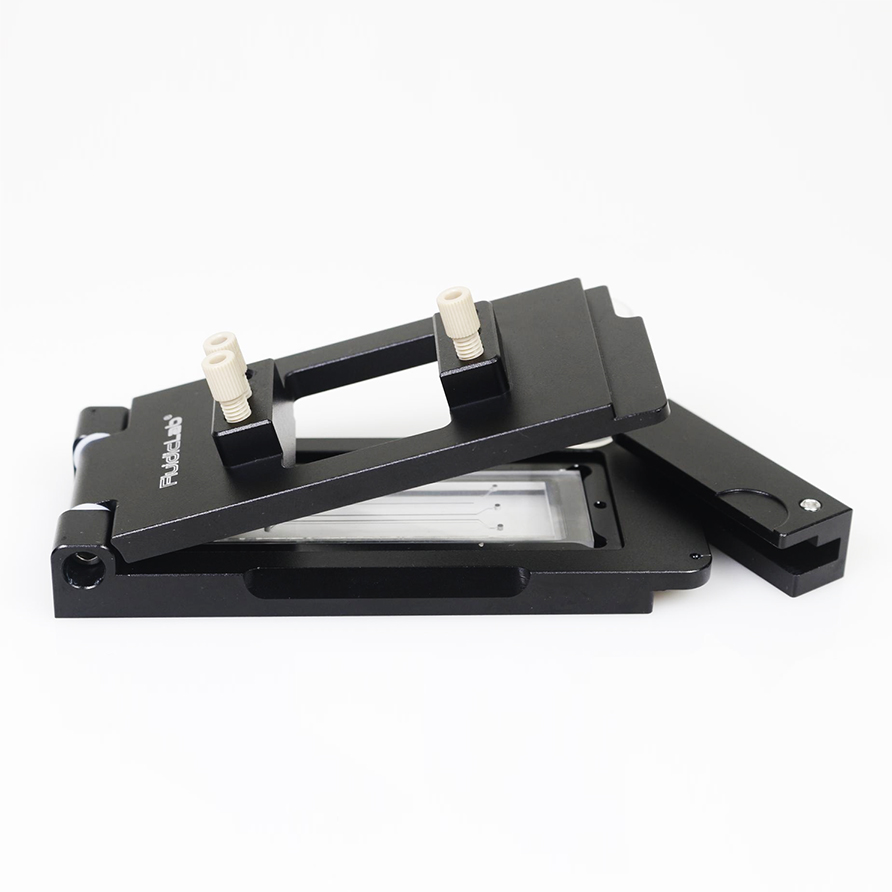
Water-in-Oil and Oil-in-Water are two types of droplets commonly generated by using glass standard microdroplet chip and chip holder. Generation of Water-in-Oil microdroplets can be obtained by hydrophobic modification of glass chip channel. Generation of Oil-in-Water microdroplets can be obtained by strong alkaline treatment of glass chip channel.

Advantages of glass flow focusing chip

1.Superior optical transparency

2.Excellent high-pressure resistance

3.Chemically inertness, resistance to various corrosive and organic solvents

4.Excellent biocompatibility

5.Low fluorescence background, easy integration with various fluorescence detection methods

  • Alginate microgels for cell encapsulation and 3D cell culture
  • Chitosan microspheres
  • Gelatin methacryloyl-based hydrogels(GelMa) for cell culture
  • Polyacrylamide beads for single cell genomics
  • Hyaluronic acid hydrogel microspheres for tissue repair
  • Polycaprolactone(PCL) microspheres for cartilage tissue repair
  • Poly(lactic-co-glycolic acid)(PLGA) microspheres
  • Polylactic acid(PLA) microspheres
SpecificationGL-FF-100AGL-FF-100BGL-FF-250AGL-FF-250B
Chip size (l×w×h)30×7.5×3 mm
Max. Operating pressure10 bar
MaterialB270 glass
FabricationHydrogen fluoride etching and low thermal bonding
Channel modificationHydrophilic*Hydrophobic**Hydrophilic*Hydrophobic**
Compatible holderStandard glass microfluidic chip holder (paired with three connector seal)
Channel width range80 μm ~ 300 μm250 μm ~ 350 μm
Flow focusing nozzle cross-section (w×h)80 μm × 38 μm250 μm × 80 μm
Droplet generation unit1
On-chip pore size (w×h)1.2 mm × 38 μm1.2 mm × 80 μm
Microdroplet sizes*** 40 μm ~ 80 μm50 μm ~ 120 μm100 μm ~180 μm160 μm ~ 240 μm

* B270 glass is hydrophilic, due to its requirement of high surface energy, still we recommend a strong alkaline treatment on the channel surface before oil-in-water microdroplet generation. This result can generally maintain for about two weeks.

** The hydrophobic modification is resistant to organic solvents. It can be removed by strong alkaline, for example a sodium hydroxide alcohol solution (2M NaOH, VEtOH:VWater=1:1) treatment for 24 hours.

*** The microdroplet sizes differ from one reagent to another, the data is for reference only.

ChipMicrodroplet typeContinuous phaseDispersed phase
Hydrophilic chipOil-in-Water2% Polyvinyl alcohol aqueous solutionDichloromethane
Hydrophobic chipWater-in-Oil2% Drop-Surf Droplet Generation OilWater

NEED HELP OR TECHNICAL INFORMATION?

GET IN TOUCH

Talk to our experts
Contact Form

PRODUCTS

Fluid Control Systems
Droplet Microfluidic Systems
LNP Synthesis System
Measurement & Detection
Microfluidic Chips
Microfluidic Reagents

APPLICATION

Hydrogel Microspheres
Nanoparticles Packs
Dissolvable gel beads

INDUSTRY

OEM Products

CONTACT

  • 315, Building 1, No. 8 Memorial Road, Yangpu District, Shanghai, China
  • +86 021-65103566